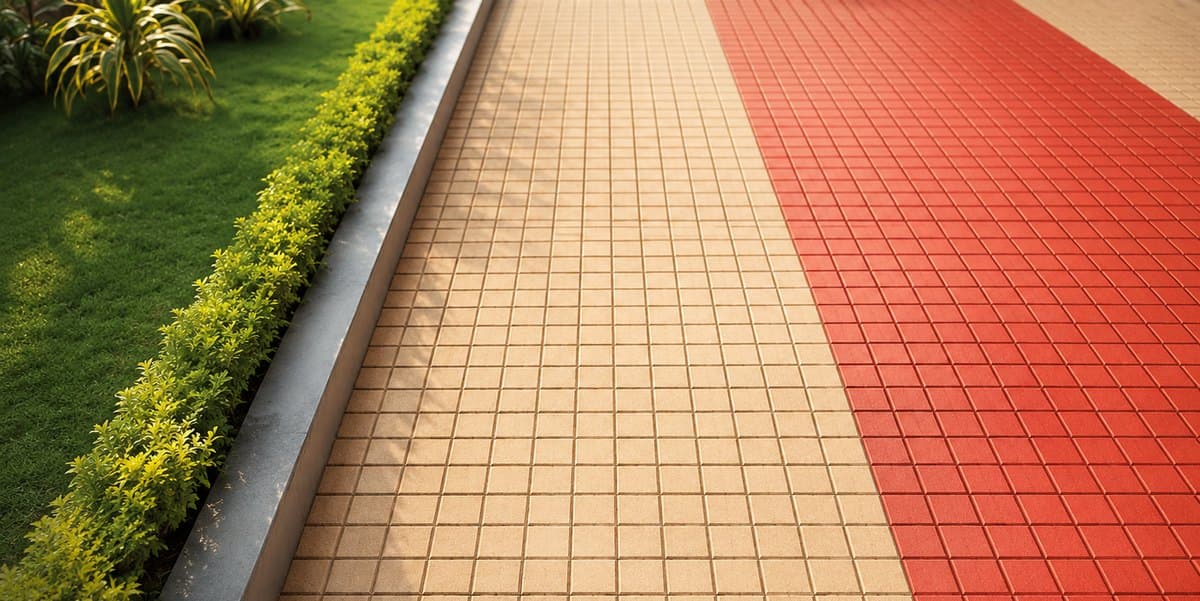
Caring for Concrete Tiles & Pavers: A Simple Maintenance Guide
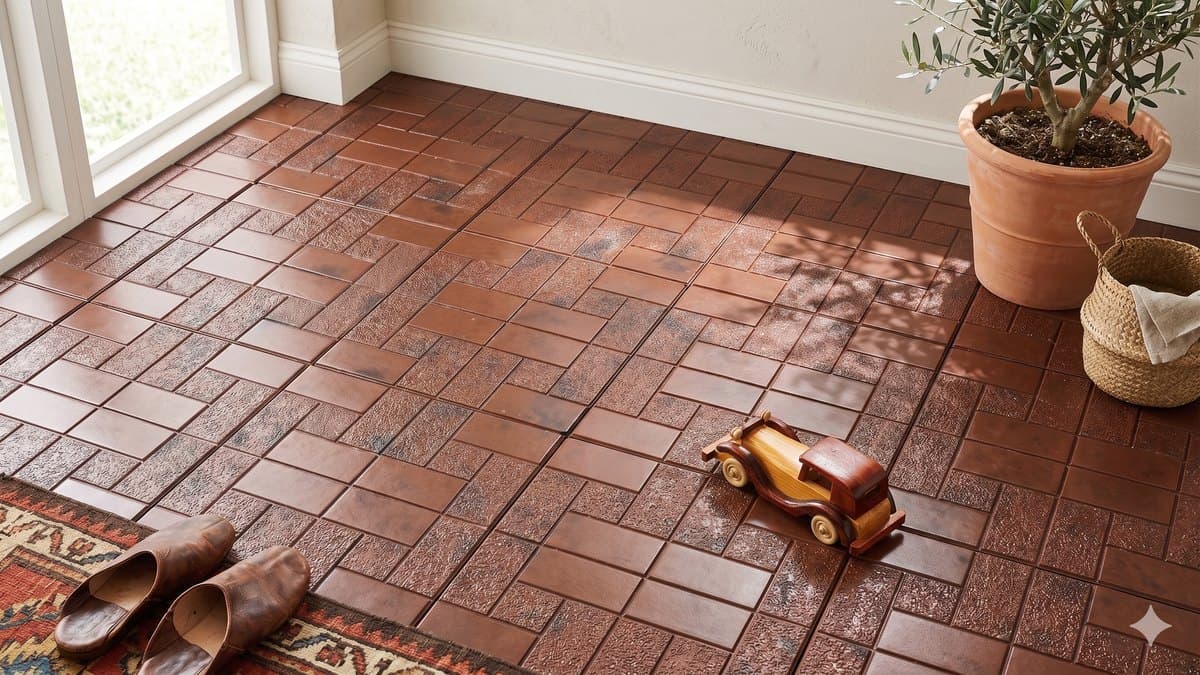
How to clean and maintain concrete floor tiles and paver blocks — routine cleaning, removing stains, topping up paver joint sand, and handling efflorescence — to keep them looking new for years.
Routine cleaning
Concrete tiles and pavers are low-maintenance by design. For day-to-day care, sweep off grit and wash down with water and a mild detergent. Because Instone surfaces have low water absorption (3–5.5%), they stand up well to washing and even high-pressure cleaning without surface scaling.
Removing stains
Tackle spills early — oil, grease and organic stains are easiest to lift before they set. A stiff brush with detergent handles most marks; for stubborn oil on a driveway, a degreaser and a pressure wash work well. Avoid harsh acids, which can etch the surface and lift pigment.
Keep paver joints full
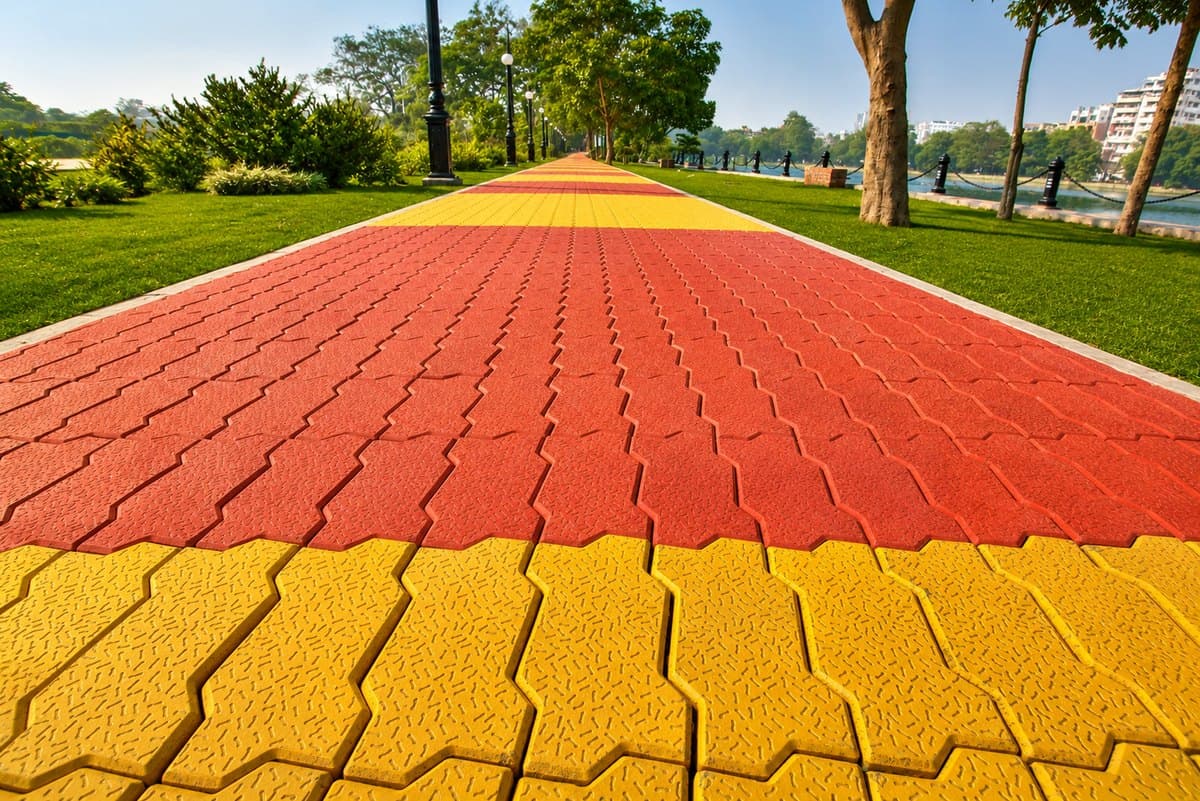
For paver blocks, the joint sand is what holds everything together. Over time, sweeping and heavy rain can wash some out — top the joints up with fine kiln-dried sand once a year (or after any relaying). Full joints keep the interlock tight and stop blocks from rocking.
If a single paver is ever damaged or a service runs underneath, individual blocks can be lifted and relaid — no demolition.
Efflorescence is normal
A faint white bloom (efflorescence) can appear on new concrete as it cures — it's natural mineral salts coming to the surface, not a defect. It fades on its own with weathering and washing, and can be removed with a proprietary efflorescence cleaner if you'd rather not wait.
Instone tiles are tested for 100% fade resistance under UV, so the colour itself won't wash out — what you're seeing is surface salts, not lost pigment.
Ready to see the range?
Explore our products