Which Paver Blocks Are Best for a Driveway?
Choosing paver blocks for a driveway? Compare zig zag, interlocking and cobblestone pavers by thickness, strength and load — plus a simple base-prep checklist for Kolkata & West Bengal.
Start with thickness and load
For a residential car driveway, 60 mm paver blocks are usually enough. If heavier vehicles use the drive — SUVs, the occasional truck, or a shared community driveway — step up to 80 mm. For industrial yards with forklifts and container traffic, use 100 mm.
Thickness matters more than the pattern: a thin paver on a poor base will rock and crack no matter how good the design looks.
Zig zag vs. other shapes
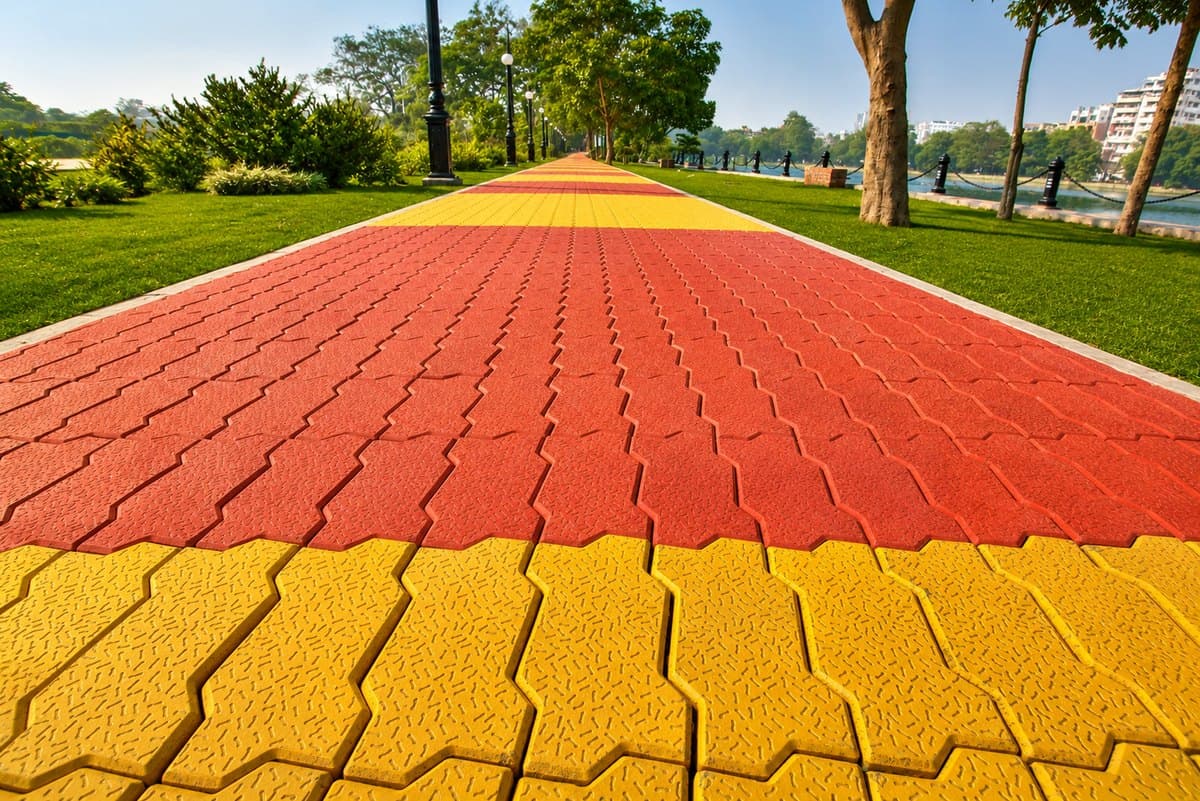
Zig zag (herringbone) pavers interlock along every edge, so they spread vehicle load sideways and resist creep where cars brake and turn. That makes them the most popular and hard-wearing choice for driveways.
Cobblestone and other dentated shapes also interlock and look more decorative — fine for lighter traffic and a premium finish. Plain rectangular blocks laid in herringbone bond also work well.
The base is half the job
A driveway is only as good as what is under it: a compacted sub-base, a bedding layer of sand, edge restraints to stop the pavers spreading, and joint sand swept in and vibrated. Get the base right and interlocking pavers last for decades — and any block can be lifted and relaid if a service runs underneath.
Ready to see the range?
Browse paver blocks