Chequered Tiles: Sizes, Uses & How to Choose (West Bengal Guide)
A practical guide to chequered tiles — common sizes, where to use them, ISI standards and how to choose the right grip and colour for driveways, platforms and footpaths in West Bengal.
What are chequered tiles?
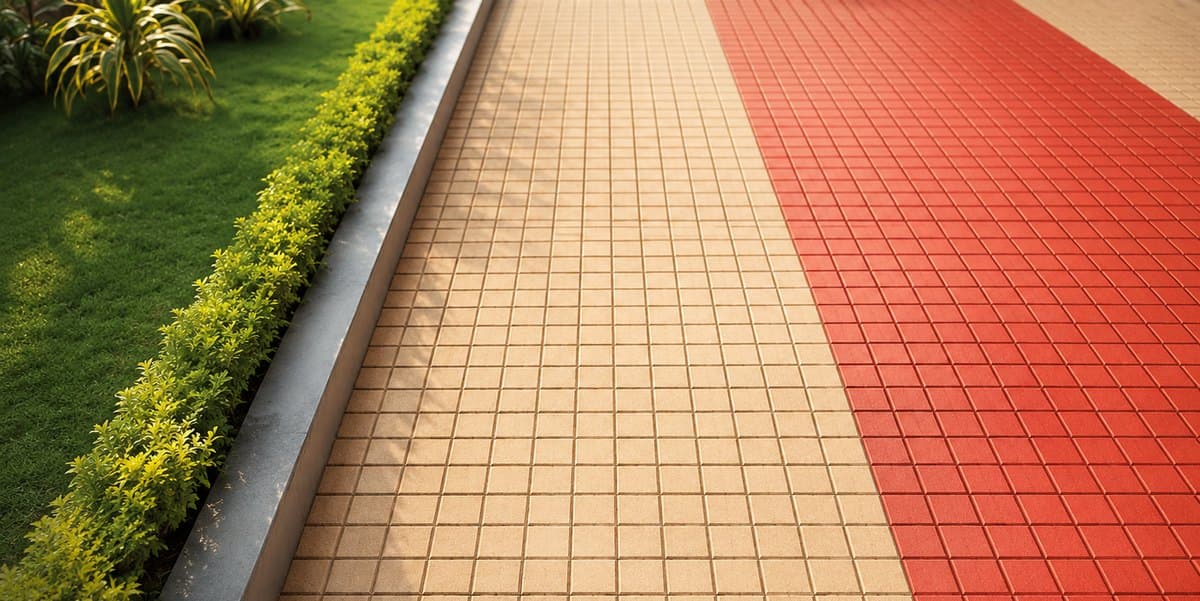
Chequered tiles are precast concrete floor tiles with a raised checker pattern on the surface. That pattern is not just decorative — it provides slip resistance, which is why chequered tiles are the default choice for footpaths, railway platforms, ramps and outdoor walkways across India.
They are manufactured by pressing a dry concrete mix at high pressure, then curing it for strength. Quality chequered tiles in India are made to IS:13801 and IS 1237 standards, which govern strength, abrasion and water absorption.
Common sizes and thickness
Instone chequered tiles are made in a 300 × 300 mm format, in two thicknesses — 25 mm and 30 mm — so you can match the tile to the load.
For heavy public footfall — platforms, bus terminals, hospital approaches — go for the 30 mm tile with a higher compressive strength (450–600 Kg/cm²). For residential courtyards and lighter footpaths the 25 mm tile is ideal.
How to choose the right chequered tile
Three things matter: grip, strength and colour-fastness. Pick a deeper checker profile for wet or sloped areas, confirm the compressive strength suits your traffic, and choose through-body or surface-hardened colour so the tile does not fade in the sun.
If accessibility matters, pair chequered tiles with tactile (line and dot) guiding tiles — together they meet platform and public-space requirements.
Ready to see the range?
View our chequered & floor tiles