How to Lay Paver Blocks: A Step-by-Step Guide
A practical step-by-step guide to laying interlocking concrete paver blocks — sub-base, edge restraints, bedding sand, laying pattern, compaction and joint sand — for driveways and yards.
Pavers are a flexible, sand-set pavement
Unlike tiles, paver blocks are not set in mortar — they sit on a compacted base and a sand bed, locked together by sand-filled joints. This flexibility lets them spread load, drain water and be lifted and relaid for services. Get the base and edges right and the rest is straightforward.
Step 1 — Excavate and build the sub-base
Excavate to depth, then lay and compact a granular sub-base. Thickness depends on load: light residential traffic needs less; driveways and industrial yards need more, with thicker 80–100 mm blocks on top. Keep a slight fall (about 1:60) for drainage.
Step 2 — Set edge restraints
Install edge restraints or kerbs around the area before laying. Without them the pavers creep and spread sideways under traffic, and the joints open up.
Step 3 — Screed the bedding sand
Spread a layer of sharp bedding sand (roughly 25–40 mm) and screed it flat to a consistent thickness. Don't compact this layer yet and don't walk on it once screeded.
Step 4 — Lay the blocks
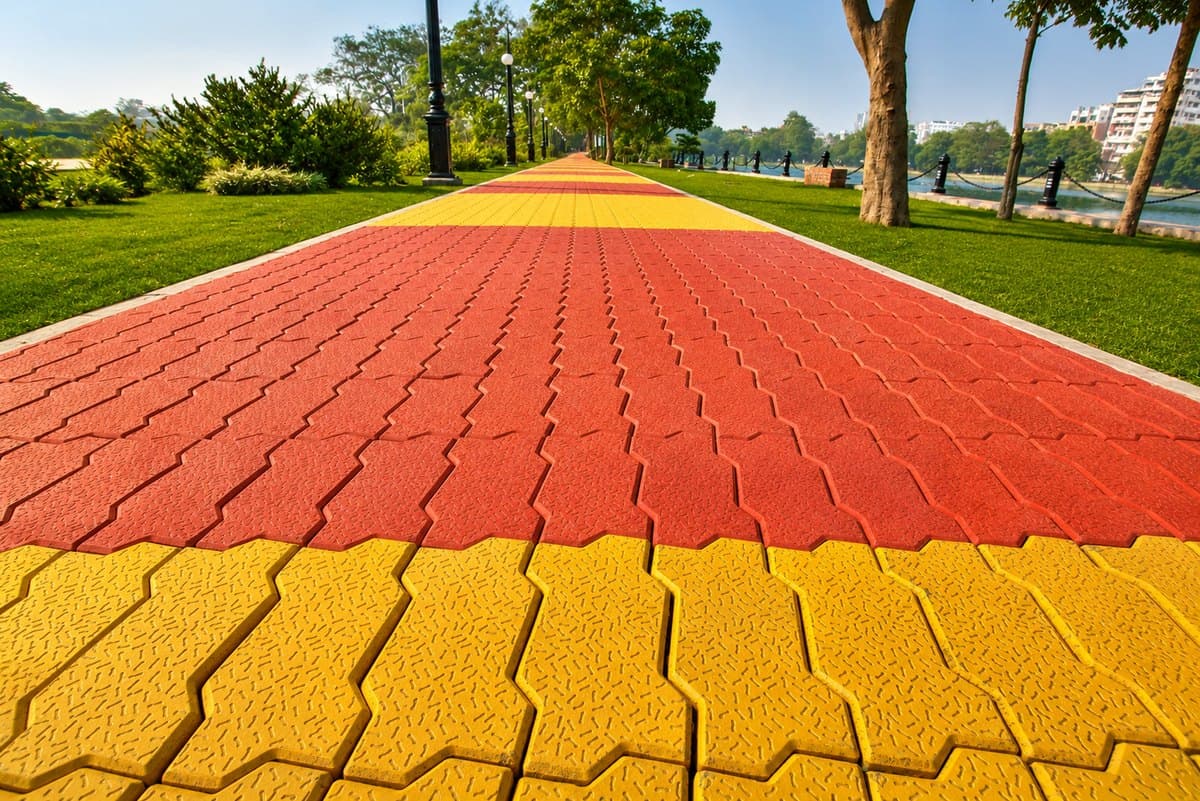
Lay the pavers hand-tight in your chosen bond — herringbone is strongest for driveways because it resists the twisting load of braking and turning vehicles. Always work forward off the pavers you've already laid so you don't disturb the screeded sand.
Step 5 — Compact and joint
Run a plate compactor over the laid pavers to bed them into the sand. Then sweep fine kiln-dried joint sand across the surface, compact again so it works down into the joints, and top up. Full joints are what create the interlock that makes the pavement strong.
Ready to see the range?
Browse paver blocks